Gödel, Escher, Bach (GEB) Framework
A teaching framework for AI literacy built on three pillars—metacognition, grounding, and ethics—borrowing ideas from Douglas Hofstadter's Gödel, Escher, Bach.
Generative artificial intelligence (AI) writes fluent text with no anchor in reality unless it is grounded. Students learn to use it well when they test its output against real data from their own projects and simulations. That is grounding, and experiential learning is one way it can happen.
GEB stands for Gödel, Escher, Bach, Douglas Hofstadter's book about systems that refer to themselves (Hofstadter, 1979/1999). The GEB Framework for AI Literacy, introduced below, borrows three of its ideas.
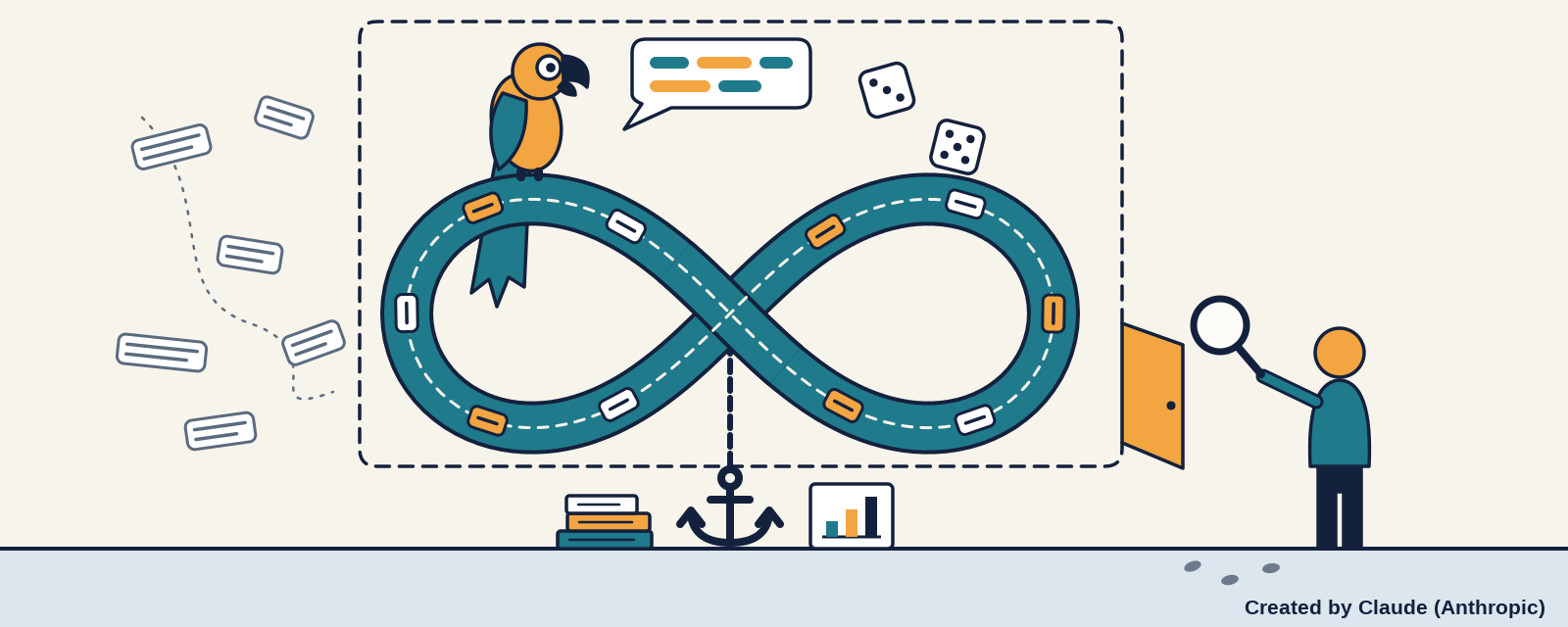
A teaching framework for AI literacy built on three pillars—metacognition, grounding, and ethics—borrowing ideas from Douglas Hofstadter's Gödel, Escher, Bach.
Doctoral research on experiential learning at an American university in Singapore (2022) and an exploratory survey study on critical AI literacy (2026 to 2027).
A four-step grounding loop used in strategic management capstone and project management courses so students verify AI output against firsthand data.
Selected articles, books, and a teaching video on AI, Douglas Hofstadter, and cognitive science.
Paul McAfee, PhD, is a Professor of Instruction with the University at Buffalo School of Management, teaching strategic management and project management in Singapore after three decades in business.
See References for full citations.